
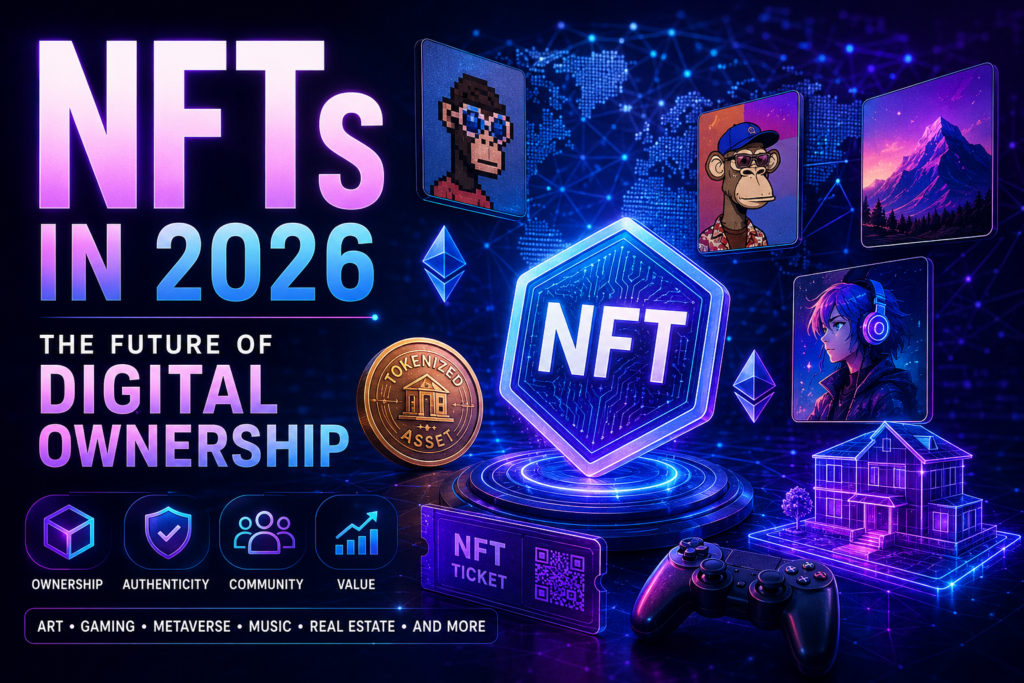
Non-Fungible Tokens (NFTs) have evolved far beyond digital art and collectibles. In 2026, NFTs are becoming an essential part of the Web3 ecosystem, offering real-world utility across industries such as gaming, entertainment, real estate, and digital identity.
What was once considered a speculative trend has now matured into a technology that enables secure and verifiable ownership of digital assets. From global brands to independent creators, NFTs are changing how we buy, sell, and interact with digital content.
What Are NFTs?
NFTs are blockchain-based digital assets that represent ownership of unique items. Unlike cryptocurrencies such as Bitcoin or Ethereum, NFTs cannot be exchanged on a one-to-one basis because every NFT has its own unique value and metadata.
NFTs can represent:
- Digital artwork
- Music and videos
- Gaming assets
- Virtual land
- Event tickets
- Digital identities
- Real-world tokenized assets
Blockchain technology ensures transparency, authenticity, and security, making NFTs highly valuable in the digital economy.
Why NFTs Matter in 2026
NFT adoption has significantly increased over the past few years. Major companies and blockchain projects are integrating NFT technology into their platforms to provide new opportunities for users and businesses.
The NFT market is now driven by utility rather than speculation.
Key Reasons NFTs Are Growing
- Ownership verification.
- Creator royalties.
- Tokenized real-world assets.
- Interoperability across Web3 platforms.
- Improved blockchain scalability.
- Enhanced user experiences.
As Web3 continues to expand, NFTs are expected to play a critical role in digital ownership worldwide.
Top NFT Use Cases in 2026
Digital Art and Collectibles
NFTs continue to dominate the digital art industry. Artists can sell their work directly to collectors without relying on traditional marketplaces or intermediaries.
Benefits include:
- Global exposure.
- Lifetime royalties.
- Secure ownership records.
- Instant payments.
Gaming and Play-to-Earn
Blockchain gaming is one of the fastest-growing sectors for NFTs.
Gamers can now truly own:
- Weapons
- Characters
- Skins
- Virtual land
- In-game currencies
NFT-powered gaming ecosystems allow users to trade assets across multiple platforms while maintaining ownership.
Virtual Real Estate
The metaverse economy continues to expand in 2026. Virtual land ownership has become increasingly popular among brands, investors, and content creators.
NFTs are being used for:
- Virtual storefronts
- Digital advertising
- Interactive experiences
- Community spaces
Virtual real estate is creating entirely new business opportunities in Web3.
How NFTs Are Transforming Businesses
NFTs are no longer limited to crypto enthusiasts. Businesses are using NFT technology for:
Customer Loyalty Programs
Brands can reward loyal customers with exclusive NFT memberships and digital collectibles.
Event Ticketing
NFT-based tickets help prevent fraud and improve security for concerts, conferences, and sporting events.
Digital Identity
Blockchain-based NFT identities offer enhanced privacy and ownership over personal information.
Tokenized Assets
NFTs are increasingly being used to tokenize:
- Real estate
- Luxury goods
- Intellectual property
- Financial assets
Tokenization is expected to become one of the largest NFT markets in the coming years.
Challenges Facing the NFT Industry
Despite their growth, NFTs still face several challenges.
Market Volatility
NFT prices can fluctuate significantly depending on demand and market sentiment.
Regulatory Concerns
Governments worldwide are actively developing regulations related to digital assets and blockchain technology.
Security Risks
Users should remain cautious when purchasing NFTs and avoid scams or counterfeit collections.
Environmental Concerns
Although many blockchains have transitioned to energy-efficient consensus mechanisms, sustainability remains an important topic for the NFT industry.
The Future of NFTs
NFT technology is expected to become more utility-driven in the coming years.
Emerging trends include:
- AI-powered NFTs
- NFT-based memberships
- Real-world asset tokenization
- Web3 social platforms
- Cross-chain NFT interoperability
- Decentralized digital identities
Industry experts believe NFTs will eventually become a fundamental component of the decentralized internet.
NFT Investment Tips for Beginners
Before investing in NFTs, consider the following:
- Research the project thoroughly.
- Verify marketplace authenticity.
- Check the development team’s credibility.
- Understand the NFT’s utility.
- Diversify your investments.
- Never invest more than you can afford to lose.
Long-term value will likely come from NFTs that offer real-world use cases rather than short-term hype.
Final Thoughts
NFTs have evolved from digital collectibles into powerful tools for ownership, innovation, and decentralized commerce. In 2026, their applications extend far beyond art, influencing industries such as gaming, finance, entertainment, and digital identity.
As blockchain technology continues to advance, NFTs are poised to become a major pillar of the digital economy. Whether you’re a creator, investor, or Web3 enthusiast, understanding NFTs today may provide valuable opportunities for the future.
Internal Links (Add These to Your Website)
- What Is Bitcoin? A Beginner’s Guide
- Ethereum ETF Inflows Drive Crypto Market Rally
- Top 10 Crypto Wallets for 2026
- Best NFT Marketplaces for Beginners
- Web3 Trends Shaping the Future of Blockchain